

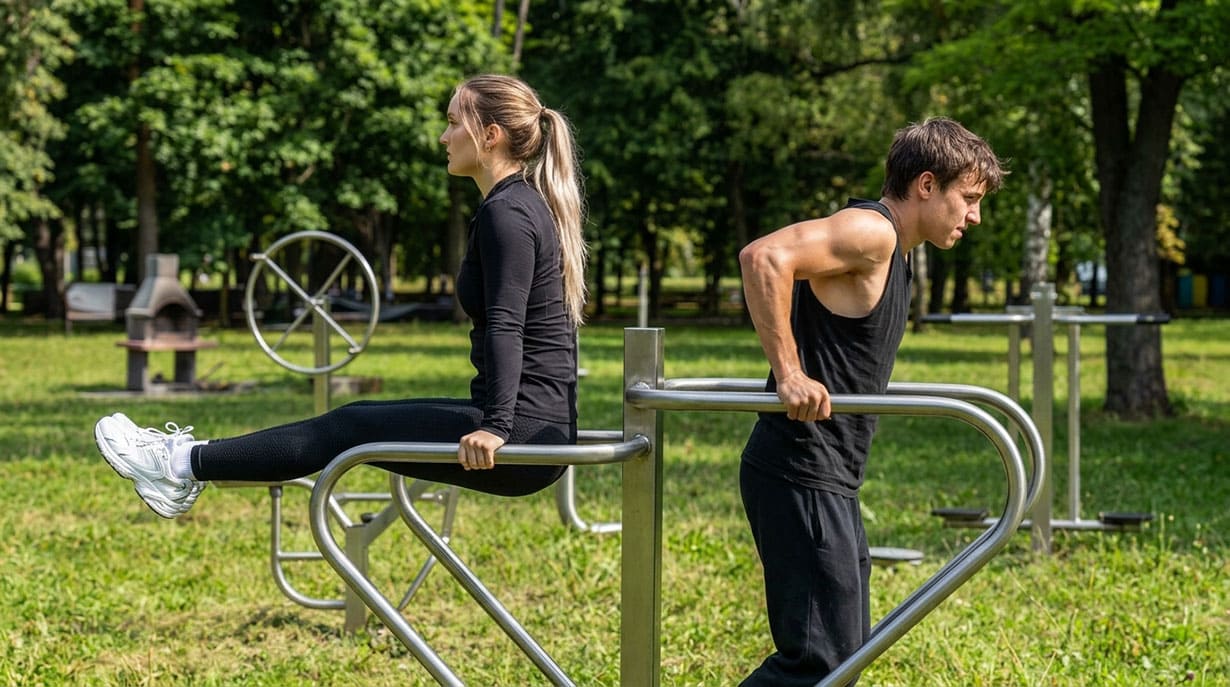

Public outdoor fitness zones have to endure what most home gyms never face: blazing summers, freezing winters, UV radiation, rain, salt spray, air pollution, heavy use, and sometimes vandalism. In this environment, material choice isn’t just a design decision—it’s the backbone of safety, reliability, and total cost of ownership. While plastic and wood have valid uses in certain contexts, stainless steel has become the gold standard for outdoor fitness equipment thanks to its unmatched durability, hygiene, structural integrity, and longevity.
Below, we explain in detail why stainless steel outperforms plastic and wood in demanding outdoor applications, what to look for in quality stainless steel equipment, and how to maximize value over the full lifecycle of a public fitness installation.
Weatherproof Durability in Real-World Conditions
Outdoor fitness equipment must survive constant exposure without losing performance or looking worn out. Stainless steel’s protective chromium oxide layer self‑heals when scratched, giving it a natural defense against weathering.
UV stability: Plastics can embrittle and fade under UV exposure, and coatings can chalk or peel. Wood can dry, crack, and warp. Stainless steel remains dimensionally stable without UV degradation.
Moisture and rot: Wood is susceptible to rot, fungal growth, and swelling/shrinkage cycles. Plastics may absorb heat and deform over time. Stainless steel resists moisture-induced damage and maintains structural integrity.
Temperature swings: Stainless steel retains strength across a wide temperature range. Plastics may soften in heat and become brittle in cold; wood’s mechanical properties fluctuate with humidity and temperature.
The result: stainless steel equipment sustains function and appearance, season after season, with minimal intervention.
Corrosion Resistance—Especially Where It Matters Most
In urban areas with de-icing salts, industrial pollution, or coastal locations with salt spray, corrosion resistance is critical. The right stainless grade makes the difference:
Grade 304: Excellent all-round corrosion resistance for inland parks, schools, and community spaces.
Grade 316/316L: Molybdenum-enhanced for superior resistance to chlorides; ideal for coastal zones, poolside environments, and regions with aggressive de-icing practices.
Reputable manufacturers TIG-weld joints and then pickle and passivate welds to fully restore the passive layer, preventing premature corrosion at heat-affected zones. Compared to painted steel (which can chip) and galvanized finishes (which may dull or wear off), stainless steel resists blistering and underfilm corrosion without relying on coatings.
Hygiene and User Safety
In high-touch public settings, cleanability is non-negotiable.
Non-porous, easy-to-clean surfaces: Stainless steel is smooth and non-absorbent, allowing quick disinfection and reducing biofilm accumulation compared to porous wood or textured plastics.
No splinters, cracking, or microplastics: Wood can form splinters and harbor germs in micro-cracks. Plastics may shed microplastic particles as they weather. Stainless steel avoids both issues.
Fire safety: Stainless steel is non-combustible. Plastics can melt or burn, and wood is combustible—both raise safety and damage concerns.
Note: While stainless steel is not inherently antimicrobial, its smooth surface makes effective cleaning straightforward. A simple routine—rinsing, mild detergent, and periodic disinfection—keeps stations safe and inviting.
Structural Integrity and Performance Under Load
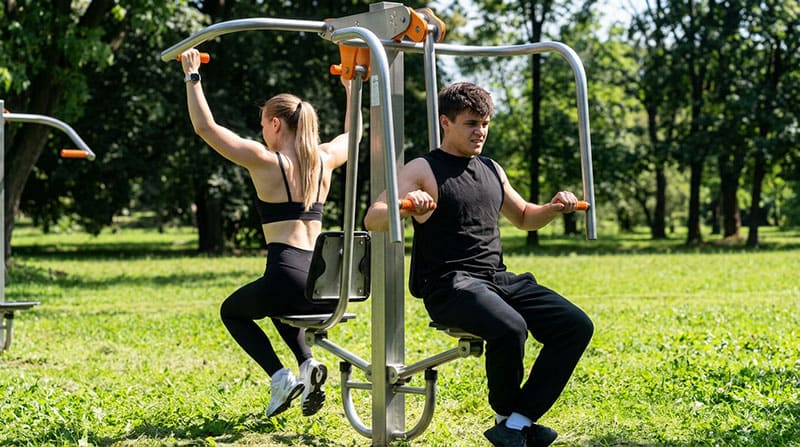
Outdoor fitness stations experience repetitive, dynamic loads from users of varying sizes and abilities. Stainless steel’s strength and fatigue resistance enable consistent performance over many years.
Load-bearing strength: Properly specified stainless tubing and plate (with adequate wall thickness) resist bending and permanent deformation better than wood or many plastics.
Precision engineering: Tight tolerances for moving parts and bearings improve smoothness and longevity. Stainless steel tolerances are easier to maintain over time than materials that swell or shrink with humidity.
Fatigue resistance: Continuous cyclic loading (e.g., pull-ups, step-ups) is handled better by stainless assemblies with sound welding and bracing, extending service life and safety.
Vandal Resistance and Public Safety
Public installations must be robust against misuse and vandalism.
Impact and tampering: Stainless steel resists denting and cutting better than most plastics and all wood. Security fasteners and tamper-resistant end caps increase protection.
Graffiti and cleanup: Non-porous stainless finishes allow faster removal of paints and markers. Wood absorbs pigments; textured plastics can trap residue.
Heat, chemicals, and solvents: Stainless surfaces withstand cleaning agents, pressure washing, and even certain solvents that would degrade plastics or strip coatings.
Maintenance and Total Cost of Ownership
Initial pricing doesn’t tell the whole story. For municipal buyers and facility managers, labor, materials, downtime, and replacement cycles often dwarf purchase price.
Minimal routine maintenance: Stainless generally requires only periodic washing. Wood needs sealing or staining, and plastics may require replacement as UV damage accumulates.
Long service life: With proper grade selection and finishing, stainless installations commonly exceed a decade or two of reliable service, even in tough environments.
Lower lifecycle cost: Fewer repairs, reduced part replacements, and less downtime mean lower total cost of ownership compared to wood and plastic systems.
Practical example: A lower-cost plastic/wood station might require partial panel replacements every 3–5 years and more frequent inspections due to wear and splinter risks. A well-engineered stainless steel station may operate for 10–20 years with only cleaning and minor wear-part swaps (e.g., bushings), yielding substantial savings.
Sustainability and Environmental Impact
Sustainability isn’t only about recycled content—it’s about durability, repairability, and end-of-life recovery.
High recyclability: Stainless steel is 100% recyclable and commonly contains significant recycled content. End-of-life recovery is straightforward and valuable.
Reduced waste: Long service life means fewer replacements and less material sent to landfill.
No off-gassing, lower microplastic risk: Plastics may release additives or microplastics as they degrade; stainless does not.
While stainless steel has higher embodied energy at production than wood, its extended lifespan and recyclability often yield a favorable long-term environmental profile.
Design Flexibility and Aesthetics
Stainless steel enables a modern, cohesive look across diverse outdoor environments.
Finishes: Brushed, bead-blasted, or satin finishes hide fingerprints and minor scuffs; textured options can enhance grip and reduce glare.
Forming and detailing: Curves, radiused edges, and ergonomic contours can be precisely fabricated for comfort and safety.
Integration: Stainless complements contemporary urban design, waterfronts, and natural landscapes without fading or discoloration.
Standards and Compliance
Quality outdoor fitness equipment should comply with relevant safety and performance standards:
Europe: EN 16630 (Fixed Outdoor Fitness Equipment) for safety, durability, and user instructions.
North America: ASTM F3101 (Unsupervised Public Use Outdoor Fitness Equipment) and complementary safety standards.
Coastal/marine corrosion testing: ISO 9227 (salt spray) used in product validation programs.
Manufacturing quality: ISO 9001 processes help ensure consistent weld quality, traceability, and material controls.
Compliance demonstrates third-party-verified performance and safety—essential for public procurement.
Addressing Common Concerns About Stainless Steel
“Doesn’t stainless get hot or cold?” Stainless can feel hot in direct sun and cold in winter. Mitigation: use lighter, low-gloss finishes to reduce heat gain; add polymer or rubberized grip zones on key touchpoints; position equipment with shade considerations; and include user guidance signage for extreme weather.
“Isn’t stainless more expensive upfront?” Often yes, but lifecycle costs are lower thanks to reduced maintenance and longer service life. Over 10–20 years, stainless typically proves more economical than frequent replacements of plastic or wood.
“What about glare and fingerprints?” Satin or bead-blasted finishes minimize glare and fingerprints. Regular cleaning quickly restores appearance.
“Can stainless corrode?” In highly aggressive environments, the wrong grade or poor weld treatment can corrode. Specify 316/316L in coastal/pool contexts and ensure welds are pickled and passivated.
What to Look for in Quality Stainless Steel Fitness Equipment
Use-Case Scenarios: Choosing the Right Configuration
Coastal promenades and marinas: Specify 316/316L stainless, sealed bearings, and bead-blasted finishes. Avoid dissimilar metals or isolate them to prevent galvanic coupling. Design for salt-laden winds and consider protective orientation.
Urban plazas and transport hubs: Prioritize vandal resistance—heavier sections, reinforced mounting plates, tamper-proof fasteners, and anti-graffiti-friendly finishes.
Schoolyards and community parks: Emphasize inclusive design with clearly labeled difficulty levels, ergonomic grips with insulating sleeves, and equipment that supports a range of users. Stainless construction reduces maintenance pressure on facility staff.
Installation, Inspection, and Maintenance Best Practices
Installation: Ensure foundations meet design specifications; verify torque on fasteners; confirm clear zones per standards.
Routine inspections: Quarterly visual checks for fasteners, wear parts, and surface damage; annual comprehensive inspection aligned with EN/ASTM guidelines.
Cleaning: Rinse with water; use mild detergents for dirt; non-chloride cleaners for stubborn stains; avoid abrasive pads on polished areas. In coastal regions, periodic freshwater rinsing reduces salt accumulation.
Wear parts: Plan scheduled replacement of bushings or grips as needed—these low-cost components protect the structural investment.
Why Stainless Steel Beats Plastic and Wood in Outdoor Fitness
Frequently Asked Questions (FAQs)
For public outdoor installations with heavy use and weather exposure, stainless steel is generally the most durable and cost-effective option over time. In very low-use, sheltered, or temporary installations, plastics or treated wood may be chosen for initial cost or aesthetic reasons, but expect more maintenance and earlier replacement.
Use 304 for most inland environments. Choose 316/316L for coastal, poolside, or de-icing salt exposure. When in doubt, 316L offers added chloride resistance.
Combine low-gloss finishes with insulating grip zones and consider site orientation and shading. Provide user guidance for extreme weather conditions.
All materials can show wear. Brushed or bead-blasted finishes reduce visibility of minor scratches and are easy to maintain. Local refinishing is usually straightforward.
No. Stainless does not require protective paint for corrosion resistance. If color accents are desired, use durable, replaceable grip elements or powder-coated accessories on non-critical parts, with proper isolation to avoid galvanic issues.
Final Thoughts
When measured against the realities of public outdoor use—weather, wear, hygiene, safety, and vandalism—stainless steel stands out as the most reliable material for outdoor fitness equipment. It protects your investment with long service life, low maintenance, and enduring good looks, all while meeting stringent safety standards and sustainability goals. If you’re planning a new installation or upgrading an existing site, choosing well-engineered stainless steel equipment will pay dividends for years to come in performance, safety, and total cost of ownership.