

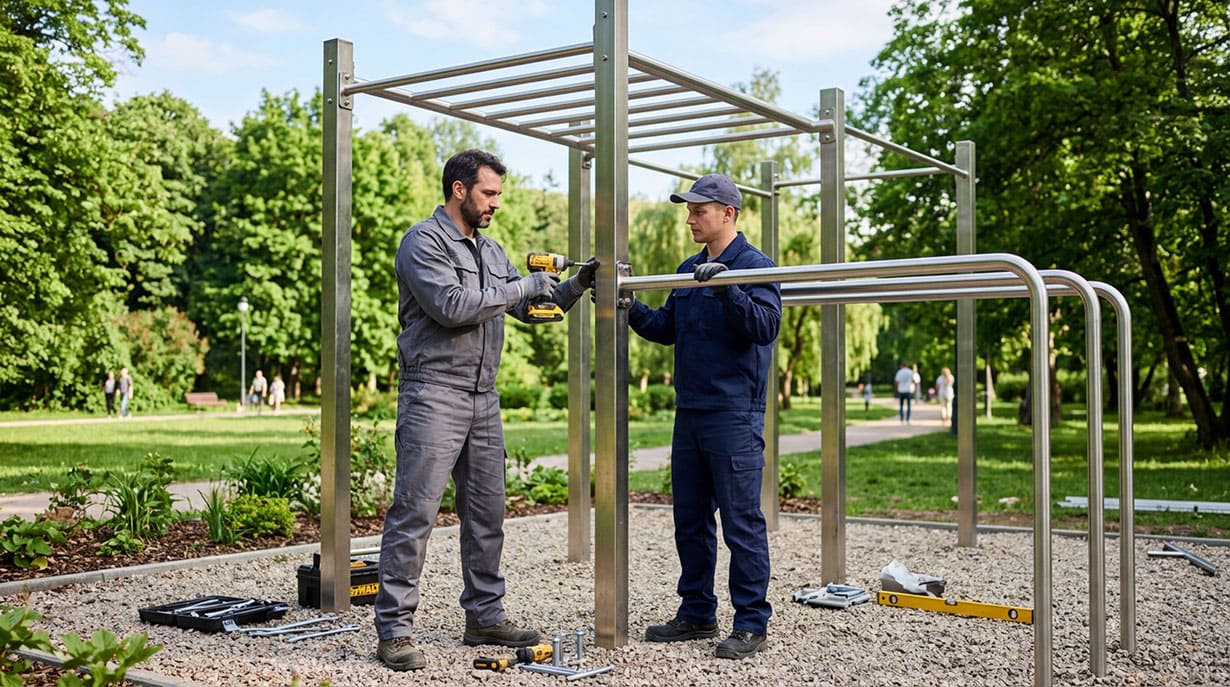

A successful outdoor gym starts long before the first anchor bolt goes into concrete. Begin by defining clear objectives and user profiles so every decision that follows has a compass. Are you designing for bodyweight training, full-body strength circuits, senior-friendly mobility, or a mixed-ability community space? Map expected footfall by time of day, consider supervised versus unsupervised use, and align equipment choices with fitness outcomes like strength, cardio, flexibility, and coordination.
Establish KPIs such as utilization rates, injury-free days, and maintenance response times so you can evaluate performance after launch and iterate with data rather than guesswork. Clear goals ensure your outdoor fitness area delivers measurable health benefits and a repeat-worthy experience.
Choose the Right Site with Smart Access and Microclimate Analysis
Site selection is the quiet hero of long-term success. Favor locations with good visibility for natural surveillance, easy pedestrian access, and proximity to complementary amenities like playgrounds, trails, and restrooms. Assess microclimate factors—sun path, prevailing winds, frost pockets, and shade cast by trees or buildings—because they affect comfort and equipment longevity.
Verify subgrade stability and drainage; even the best equipment will suffer if pads sit in standing water. Plan lighting to balance safety with neighborhood impact, and perform a noise and traffic assessment to keep community relations smooth from day one. A well-sited outdoor gym invites participation, feels safe, and weathers the seasons without costly interventions.
Permits, standards, and safety compliance must be baked in, not bolted on. Align your design with relevant frameworks such as EN 16630 in Europe or ASTM F3101 in North America to address clear zones, structural durability, and user instructions. Coordinate with local building codes for foundations, anchors, and accessibility requirements, and confirm obligations under ADA or local equivalents to guarantee inclusive access.
Define fall zones and surfacing performance where needed, and specify sightline-friendly placement for supervision in school or campus settings. Establish a pre-opening inspection checklist and a post-installation audit by a qualified third party to document compliance and baseline condition. Proactive compliance reduces liability and accelerates approvals.
Specify Durable Materials and an Equipment Mix That Scales
Material choices and equipment specification will determine how your investment performs over a decade, not just a season. For outdoor environments, stainless steel is the benchmark for durability, hygiene, and vandal resistance, with grade 304 suitable for inland parks and 316/316L recommended for coastal, poolside, or de-icing salt exposure.
Look for TIG-welded joints that are pickled and passivated, low-gloss brushed or bead-blasted finishes to manage heat and glare, and sealed bearings or bushings rated for weather. Curate a balanced equipment mix—pull-up frames, push-press stations, parallel bars, step-up platforms, and rotational cores—ensuring progression options for beginners and advanced users. Integrate grip zones with insulating sleeves at key touchpoints to improve comfort across seasons without compromising cleanliness, and verify that every station includes clear instructions for safe, effective use.
Optimize Layout, Accessibility, and Surfacing for Seamless Flow
Layout is where planning becomes user experience. Organize stations to create intuitive flow, separating dynamic movements from static stretches and allowing clear sightlines for safety. Maintain adequate spacing so users can exercise without interference and instructors can lead classes, while leaving zones for warm-up and cooldown that do not interrupt circuits. Provide accessible routes, transfer heights, and turning radii that welcome wheelchair users and those with limited mobility, and ensure at least one path of travel meets accessibility standards.
Choose surfacing that pairs performance with maintenance realities—poured-in-place rubber for consistent accessibility and shock attenuation, bonded rubber mulch for cost-effective zones, or high-quality synthetic turf for agility drills—with engineered base and drainage layers that prevent settlement and frost heave. Include durable, weatherproof signage with clear instructions, suggested sets and reps, QR codes to videos, and safety cautions to elevate confidence and reduce misuse.
Design for Corrosion Resistance, Vandal Mitigation, and Easy Maintenance
Design for corrosion resistance, vandal mitigation, and maintainability from the outset. Specify tamper-resistant stainless fasteners, welded end caps, and concealed fixings that deter misuse and theft. Isolate dissimilar metals to avoid galvanic corrosion, especially in marine climates, and design components to shed water rather than trap it. Plan a simple care regime—periodic freshwater rinsing, mild detergent cleaning, and scheduled inspections of wear parts like grips and bushings—and document it in a maintenance manual accompanied by training for staff. Establish a spare-parts kit and response SLAs so minor issues don’t take stations out of service for weeks. A clean, functioning gym sustains community trust and drives consistent attendance, while durable choices reduce downtime and total lifecycle costs.
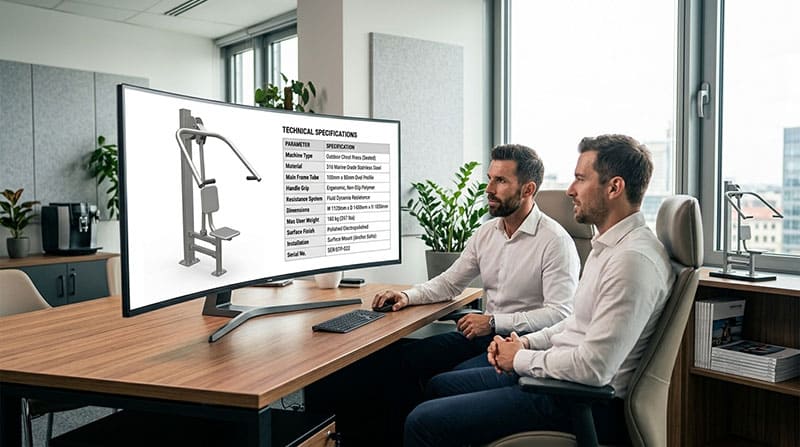
Budget for Total Cost of Ownership and Resilient Procurement
Budgeting should center on total cost of ownership, not just purchase price. Calculate foundations, shipping, installation, surfacing, lighting, signage, inspections, and contingency alongside equipment costs, and model operating costs for cleaning, inspections, and wear-part replacement. Compare lifecycle scenarios for stainless steel versus painted or plastic-heavy alternatives to understand replacement intervals and labor demands over 10–20 years.
Request structural and corrosion warranties, verify spare-part availability, and ask for material certifications and test reports. Evaluate procurement models—direct purchase, framework agreements, or public-private partnerships—and explore grants tied to health promotion, sustainability, or active travel. A realistic, holistic budget prevents value-engineering that compromises durability and user safety, ensuring the outdoor gym remains a valued community asset.
Engage the Community and Plan Launch, Programming, and Operations
Community engagement and smart operations turn hardware into habit. Consult neighbors, schools, and local fitness leaders to shape the equipment mix and operating considerations like quiet hours or class schedules, and use surveys to validate preferences. Launch with free classes, challenges, and digital tracking through QR-coded workouts to build momentum, then review participation data to refine programming.

Complement the space with amenities—shade sails or trees for comfort, drinking water for hydration, and bike racks for active transport—that remove friction from regular use. Sequence construction to protect surfacing and landscaping, coordinate delivery and crane access, verify concrete cure times before loading equipment, and capture as-builts, material certificates, and torque logs at handover. Schedule 30-, 90-, and 180-day inspections to catch settling issues early, and track usage patterns and feedback for quick, low-cost tweaks like added shade or reoriented stations that can dramatically improve satisfaction.
Frequently Asked Questions (FAQs)
Space needs vary by equipment mix and anticipated users, but many community installations function well in 150–400 square meters when layouts are efficient and circulation is clear. The priority is not absolute area but safe spacing between stations, accessible routes, and room for small-group classes without overlap.
Yes, engineered foundations matched to soil conditions are essential. Most equipment requires reinforced concrete pads or footings sized for dynamic loads and frost depth, with proper anchors and corrosion-resistant fixings. Skipping foundation design is a leading cause of premature movement, loosening, and surface damage.
For public outdoor gyms, stainless steel offers the best balance of corrosion resistance, structural integrity, hygiene, and vandal resilience, especially in 304 for inland and 316/316L for coastal or chemically aggressive environments. Painted steel chips, plastics degrade under UV, and wood demands frequent sealing and can splinter.
Poured-in-place rubber delivers consistent accessibility and low trip risk, while bonded rubber mulch can be cost-effective for lower-impact zones. High-quality synthetic turf supports agility work when paired with an engineered base. Whatever you choose, prioritize drainage, edging, and maintenance plans to preserve performance.
Specify low-gloss brushed or bead-blasted finishes, orient stations with shade in mind, and add insulating grip zones at key touchpoints. Incorporating shade sails or planting canopies improves comfort while preserving sightlines and safety.
Plan quarterly inspections for fasteners and wear parts, routine cleaning with water and mild detergent, and annual comprehensive checks aligned with safety standards. In coastal areas, periodic freshwater rinsing reduces salt accumulation. Keeping grips and bushings in good order protects the structural investment and user experience.
Conclusion
A well-planned outdoor gym is the product of clear goals, smart siting, rigorous compliance, durable materials, thoughtful layout, and an honest lifecycle budget—all tied together by community engagement and active programming. By prioritizing stainless steel equipment for longevity and hygiene, designing for accessibility and flow, and committing to simple, scheduled maintenance, you create a space that performs in every season, invites users of all abilities, and delivers dependable value for years. Thoughtful planning up front isn’t a delay; it’s the fastest path to a safe, vibrant, and enduring outdoor fitness destination.